

Our White-Label Working Process — From Understanding To Reliable Delivery
Every Project Starts With Understanding
We establish a clear understanding of the project before any execution begins.

Process
Understand the Requirement
We review the complete project requirements, reference material, objectives, and expected deliverables.Clarify Before We Execute
Any ambiguity, missing information, or conflicting requirements is identified and clarified with the agency before work begins.Freeze the Scope
Once the requirements are clear, the scope of work is established so the execution team has a defined basis for delivery.
Why This Matters
Your project doesn’t begin with assumptions. It begins with a shared understanding of what needs to be delivered and how it will be executed.
How This Improves The Outcome
Clear requirements and a defined scope reduce misalignment, unnecessary revisions, delays, and avoidable rework before execution even begins.
A Clear Plan Before Execution Begins
Once the project scope has been fully understood & clarified, we turn it into a structured execution plan through our validation sheet.

What the Validation Sheet Defines
Tasks & Sub-Tasks
The project is broken down into clearly defined tasks and sub-tasks.Responsibilities
Each task is assigned to the appropriate executor.Execution Sequence
The order in which the work will be carried out is established.Timelines
Expected completion timelines are defined for the individual tasks.Project Scope
The agreed requirements become the reference point for execution.
Why This Matters
You know what is being executed before execution begins—not just what the final deliverable is expected to be.
How This Improves The Outcome
A clearly defined execution plan creates predictability, improves project visibility, and reduces the risk of misalignment, missed requirements, and avoidable delays.
Built to Work Within Your Technical Standards
We adapt our execution to the technical standards, architecture, and conventions already established by your agency.

What Happens
Understand Your Existing Structure
We review the relevant technical architecture, coding structure, conventions, and implementation approach before development begins.Follow Your Standards
Where required, our team works within your established coding and development standards rather than introducing a different approach.Maintain Consistency
The completed work is structured to remain consistent with your existing projects, making it easier for your team to review, manage, and maintain.
Why This Matters
Your outsourced project should feel like it was developed within your existing technical environment—not by a completely separate team working by its own conventions.
How This Improves The Outcome
Working within your established standards creates greater technical consistency and makes future maintenance, handover, and collaboration with your own team easier.
Predefined Fixed Pricing for Established Project Types
For established project types with a clearly defined scope, we offer predefined fixed pricing that remains consistent across projects of the same category.

How It Works
Established Project Types
Projects that fall within our established categories are covered by predefined fixed pricing.Fixed Pricing
The agreed price remains fixed for projects that fall within the defined scope and category.Exceptional Projects
When a project falls outside our established categories or has unique requirements, we assess the scope and provide a project-specific quotation.
Why This Matters
You can plan your project costs with greater certainty instead of renegotiating pricing for every recurring project type.
How This Improves The Outcome
Consistent fixed pricing makes it easier to plan budgets, price your own client projects, and scale recurring work without starting the commercial discussion from scratch each time.
A Dedicated Team Behind Every Project
Your project is managed through a defined team structure, with a dedicated Project Manager coordinating communication and execution from start to finish.

Team Structure
Dedicated Project Manager
Your single point of contact throughout the project, responsible for communication, coordination, progress updates, and keeping the project moving forward.
Department / Technology Head
Provides technical oversight, assigns work to the appropriate specialists, and reviews execution within the relevant department.
Experienced Executors & Specialists
Tasks are assigned to the appropriate specialists based on the requirements and expertise needed for the project.
Three-Layer Quality Verification
Every project passes through three levels of checking before it reaches your agency:
First Level — Executor
Second Level — Technology Lead
Final Level — Project Manager
Why This Matters
You have one accountable point of contact while an experienced execution team works behind the scenes to deliver the project.
How This Improves The Outcome
Clear ownership and defined responsibilities reduce communication gaps, prevent tasks from falling through the cracks, and minimize rework by ensuring that work is checked before it reaches your agency.
Execution Managed Through Our Own Task Management System
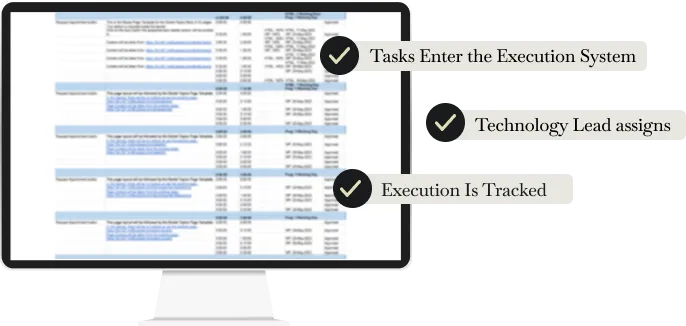
Once the validation sheet is finalized, the approved tasks and sub-tasks are added to our own task management system, designed around our execution process.
How It Works
Tasks Enter the Execution System
The approved tasks and sub-tasks from the validation sheet are added to our internal task management system.Technology Lead Assigns the Work
The Technology Lead assigns each task to the appropriate executor based on the requirements and expertise needed.Execution Is Tracked
Task progress is monitored throughout the project to ensure work remains aligned with the approved execution plan and timelines.
Why This Matters
The approved execution plan moves directly into our internal task management system, creating a clear link between what was agreed and what is actually executed.
How This Improves The Outcome
Defined task ownership and continuous tracking improve accountability, keep execution organized, and help prevent missed tasks, communication gaps, and avoidable delays or rework.
Clear Communication. Complete Project Visibility.
Your agency stays informed throughout the project through a defined communication and update process.
How It Works
One Point of Contact
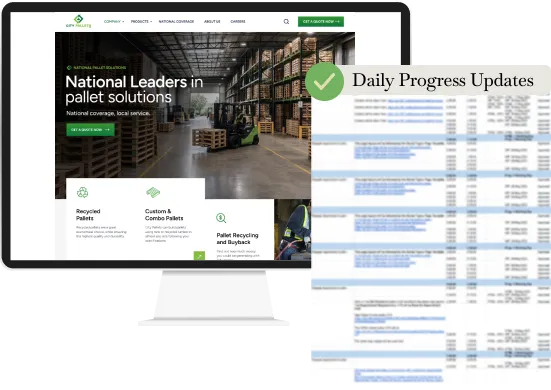
Your dedicated Project Manager remains the single point of contact between your agency and our execution team.Daily Progress Updates
At the end of each working day, the Project Manager provides an update on the project’s progress, completed work, ongoing tasks, and relevant next steps.Work Within Your Tools
We adapt to the communication and project-management tools your agency already uses, including platforms such as Slack, Microsoft Teams, Asana, Jira, Trello, and similar tools.Transparent Project Status
Where no specific project-management tool is used, progress and status are maintained through the agreed validation sheet and regular communication.
Why This Matters
You don’t have to chase the execution team to know what is happening. Your Project Manager keeps communication centralized and project progress visible.
How This Improves The Outcome
Consistent communication and clear project visibility reduce follow-ups, prevent communication gaps, and give your agency greater control and confidence throughout execution.
When Something Changes or Goes Wrong, We Don’t Go Silent
Changes are a normal part of projects. When requirements change, we re-validate the impact before proceeding. When an execution issue arises, we take ownership, communicate openly, and work with you to resolve it.
How We Handle Changes & Issues
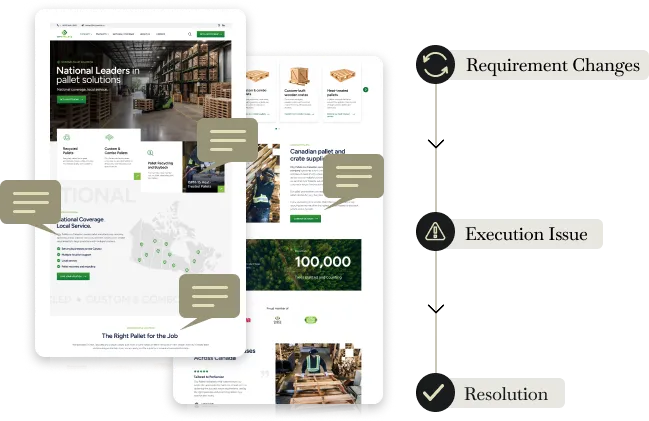
Requirement Changes Are Re-Validated
When a requirement changes, we assess its impact on the agreed scope, execution plan, timelines, and, where applicable, cost. The revised requirement is re-validated and shared with the agency before execution proceeds.Issues Are Owned, Not Avoided
If an issue arises during execution—particularly one caused by a misunderstanding or misalignment with the agreed requirement—the Project Manager takes ownership of coordinating its resolution.The Right Team Gets Involved
The relevant Technology Lead and execution team are brought in to identify what went wrong, determine the corrective action, and work toward a resolution.The Agency Stays Informed
The Project Manager communicates the impact, decisions, and next steps so the agency remains informed throughout the resolution process.
Why This Matters
In a white-label partnership, an execution issue can directly affect your client relationship. You need an execution partner who remains accountable and communicative when things don’t go as planned.
How This Improves The Outcome
Early re-validation of changes prevents scope and timeline surprises, while active issue ownership helps resolve problems before they escalate into prolonged delays, repeated work, or loss of client confidence.
Every Deliverable Is Checked at Three Levels
Before completed work reaches your agency, it passes through three levels of verification to ensure it meets the agreed requirements and expected standards.
How It Works
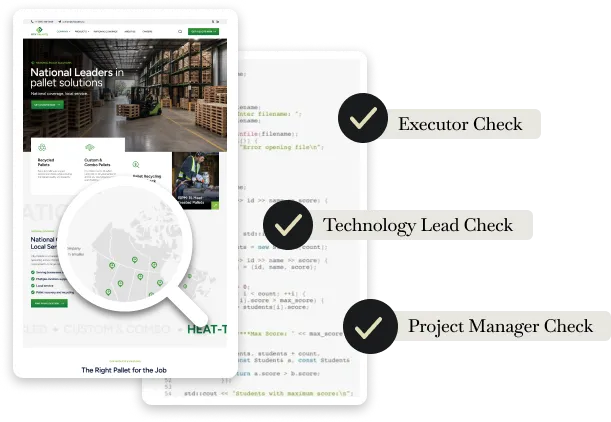
Executor Check
The executor reviews the completed work against the assigned task, requirements, and expected outcome before submitting it for review.Technology Lead Check
The Technology Lead independently reviews the work for technical accuracy, implementation quality, and alignment with the project requirements.Project Manager Check
The Project Manager performs the final verification to ensure the work is complete, aligned with the agreed scope, and ready to be presented to the agency.
Why This Matters
The work you receive has already passed through our internal checking process rather than reaching you directly from the person who executed it.
How This Improves The Outcome
Three levels of verification help identify errors and inconsistencies before delivery, reducing avoidable rework, revisions, and delays for your agency.
Delivery Without the Last-Minute Rush
Once execution and quality verification are complete, the project moves through a defined final delivery and handover process.

How It Works
Final Completion Check
We confirm that the agreed tasks and requirements have been completed and that the work has passed our internal verification.Final Delivery
The completed work is delivered to the agency through the agreed communication or project-management channel.Handover
Where required, relevant files, credentials, documentation, or other project information are handed over so your team can take the project forward.
Why This Matters
Delivery is treated as part of the process, not as the point where responsibility simply ends.
How This Improves The Outcome
A structured final handover reduces missing information, last-minute follow-ups, and unnecessary delays in moving the completed work into the next stage.
What This Means for Your Agency
When execution is predictable and managed without adding to your team’s workload, your agency gains:
Greater capacity to take on more projects and opportunities
More time for your team to focus on clients and growth
Greater delivery capacity without proportionally increasing your internal team
More confidence in taking on work without compromising quality
The ability to scale without proportionally increasing operational overhead
Ready to Explore a White-Label Partnership?
Let’s discuss how VPW can become a reliable extension of your agency’s execution team.